LED Lighting Guide to Choosing the Right Fixtures for Your Space
LED lighting has become a practical choice for residential, commercial, and industrial spaces because it combines energy efficiency with flexible lighting options.
However, selecting the right fixture involves more than choosing a bulb that fits an existing socket. Brightness, color temperature, beam direction, and installation requirements all influence the final result.
Different spaces have different lighting needs. A kitchen requires clear illumination for food preparation, while a bedroom benefits from softer light that supports relaxation. Offices, retail environments, and industrial facilities also require fixtures suited to their activities, layouts, and operating conditions.
Understanding LED lighting options makes it easier to compare fixtures, avoid common selection mistakes, and create comfortable, functional spaces. The right approach considers both the immediate lighting effect and longer-term factors such as energy consumption, maintenance, compatibility, and durability.
How LED Lighting Fixtures Differ
LED stands for light-emitting diode, a semiconductor device that produces light when electrical current passes through it. Unlike traditional incandescent bulbs, LEDs do not rely on heating a filament to generate illumination, which helps them use electricity more efficiently.
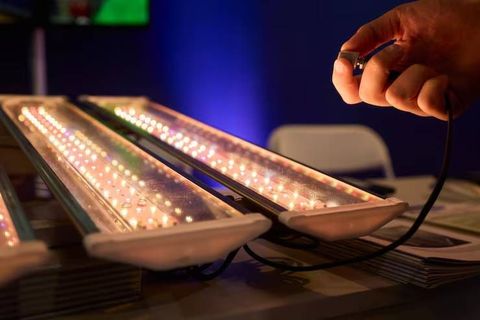
LED fixtures come in several forms, including recessed downlights, ceiling panels, linear lights, track lighting, wall-mounted fixtures, and high-bay industrial lights. Some are designed to accommodate replaceable bulbs, while others contain integrated LED modules.
The distinction matters when evaluating installation and maintenance. Replaceable-bulb fixtures allow users to change the lamp separately, whereas integrated fixtures may require replacement of a component or the entire unit if the LED system fails. Product design, driver accessibility, warranty terms, and installation conditions should therefore be considered together.
Choosing Brightness and Color Temperature
Brightness and color appearance are two of the most important factors when selecting LED lighting. Understanding them helps prevent spaces from feeling either uncomfortably bright or insufficiently illuminated.
Lumens and Light Distribution
Lumens measure the total visible light emitted by a source. Watts measure electrical power consumption, so wattage alone does not accurately indicate how bright an LED fixture will appear.
When comparing products, check their lumen output and consider the room's size, ceiling height, wall colors, and intended activity. A fixture with a high lumen rating may still perform poorly if its beam does not reach the areas where light is needed.
Light distribution matters as much as overall output. Recessed downlights can provide focused illumination, while broad ceiling panels distribute light across larger areas. Adjustable track fixtures help direct light toward displays, artwork, or specific work surfaces.
Color Temperature and Color Rendering
Correlated color temperature (CCT), measured in kelvins, describes whether a light appears warm, neutral, or cool. Lower values generally produce a warmer appearance, while higher values appear cooler.
Warm white lighting is often suitable for bedrooms, lounges, and hospitality environments. Neutral white can work well in kitchens, offices, and multipurpose areas, while cooler light may suit certain workshops and task-focused settings.
Color rendering is another consideration. The Color Rendering Index (CRI) indicates how accurately a light source reveals colors compared with a reference source. A CRI of 80 or above is commonly used for general lighting, while applications involving detailed color evaluation may benefit from higher-CRI products.
Matching LED Fixtures to Different Spaces
The most appropriate fixture depends on what people do in the space, where light is required, and how the room is constructed.
Living rooms and bedrooms generally benefit from comfortable ambient lighting supported by localized task or accent fixtures. Dimmable LEDs can provide flexibility for different activities, provided the lamp, driver, and dimmer are compatible.
Kitchens and bathrooms require practical illumination around work surfaces, mirrors, and storage areas. Under-cabinet lights can reduce shadows on countertops, while bathroom fixtures must have suitable protection for their intended installation location and exposure to moisture.
Offices and commercial spaces need balanced illumination that supports visual comfort and reduces distracting glare. Recessed fixtures, linear LED systems, and suspended panels are common options, but spacing, mounting height, and screen positions influence the final result.
Warehouses and industrial facilities may require high-bay fixtures, weather-resistant luminaires, or specialized lighting for demanding operating environments. Ceiling height, dust, moisture, temperature, vibration, and maintenance access should influence fixture selection.
Comparing LED Fixture Types
Different fixture designs solve different lighting problems. Comparing their applications helps narrow the available options before reviewing individual product specifications.
| Fixture type | Common applications | Main consideration |
|---|---|---|
| Recessed downlights | Homes, corridors, retail spaces | Ceiling compatibility and beam angle |
| LED panels | Offices, classrooms, commercial interiors | Uniform illumination and glare control |
| Linear LED fixtures | Kitchens, offices, workshops | Length, mounting method, and light distribution |
| Track lighting | Retail displays, galleries, accent lighting | Adjustable direction and track compatibility |
| High-bay lights | Warehouses, factories, large halls | Mounting height and required light levels |
| Outdoor LED fixtures | Entrances, pathways, parking areas | Weather protection and optical distribution |
Fixture categories alone do not determine performance. Two products with similar designs can differ considerably in lumen output, optical quality, driver reliability, thermal management, and suitability for a particular environment.
For this reason, compare technical specifications rather than relying exclusively on appearance or advertised wattage.
Energy Efficiency, Controls, and Long-Term Performance
LED lighting can reduce electricity consumption compared with less efficient lighting technologies, but actual savings depend on the existing system, operating hours, light output, and control settings.
Lumens per watt provide a useful efficiency measure. A fixture delivering more lumens per watt produces more light for each unit of electrical power, although optical losses, glare, and light distribution must also be considered.
Lighting controls can improve efficiency further. Occupancy sensors switch or adjust lighting based on detected activity, while daylight sensors respond to available natural light. Dimming controls can reduce output when full brightness is unnecessary, provided all connected components support the intended control method.
Long-term performance also depends on thermal management and driver quality. Excessive heat can shorten LED system life, particularly when fixtures are installed in unsuitable enclosed spaces. Review the manufacturer's operating-temperature limits, stated lifetime assumptions, warranty coverage, and replacement-part availability.
An advertised LED lifetime does not necessarily mean every component will operate for that duration without degradation or maintenance.
What to Check Before Selecting an LED Lighting Supplier
Product specifications are only one part of a successful lighting project. The supplier's technical support, product documentation, and ability to provide suitable fixtures can also affect installation quality and ongoing maintenance.
Check whether the supplier provides clear photometric data, installation instructions, electrical ratings, warranty conditions, and applicable safety certifications. For larger commercial or industrial projects, ask whether lighting layouts or photometric calculations are available to confirm that the proposed fixtures can achieve the intended illumination.
Compatibility deserves particular attention when upgrading existing lighting. Confirm socket type, supply voltage, dimmer compatibility, driver requirements, mounting dimensions, and any restrictions involving enclosed fixtures or insulation.
For projects involving multiple rooms or large facilities, compare products on a consistent specification basis. A lighting professional can help assess illumination levels, glare, emergency lighting requirements, and applicable building or workplace standards where necessary.
Frequently Asked Questions
Are LED fixtures suitable for every room?
LED fixtures are available for most indoor and outdoor applications, but the product must suit the environment. Moisture exposure, temperature, mounting conditions, and required light distribution all affect suitability.
Is a higher lumen rating always better?
No. Higher lumen output can be useful where stronger illumination is needed, but excessive brightness can cause glare and discomfort. Match the output to the room, task, mounting height, and fixture distribution.
Can LED lights work with existing dimmer switches?
Some can, but compatibility is not universal. Check the LED manufacturer's compatibility guidance and confirm that the dimmer and driver support the intended dimming method.
What determines the service life of an LED fixture?
Service life depends on factors such as operating temperature, driver quality, component design, electrical conditions, and usage patterns. Review the manufacturer's rated lifetime and the conditions under which it applies.
Conclusion
Choosing LED lighting fixtures requires balancing brightness, color quality, fixture design, energy efficiency, installation conditions, and long-term reliability. The most suitable option depends on the space's purpose rather than a single specification.
By comparing technical documentation, checking compatibility, and considering how light will be distributed, homeowners and businesses can select fixtures that meet practical requirements and support comfortable, efficient lighting.

Related Post...


Corporate Gifting Solutions Discover Ideas That Strengthen Client and Employee Connections
Updated: October 26, 2026
Read More